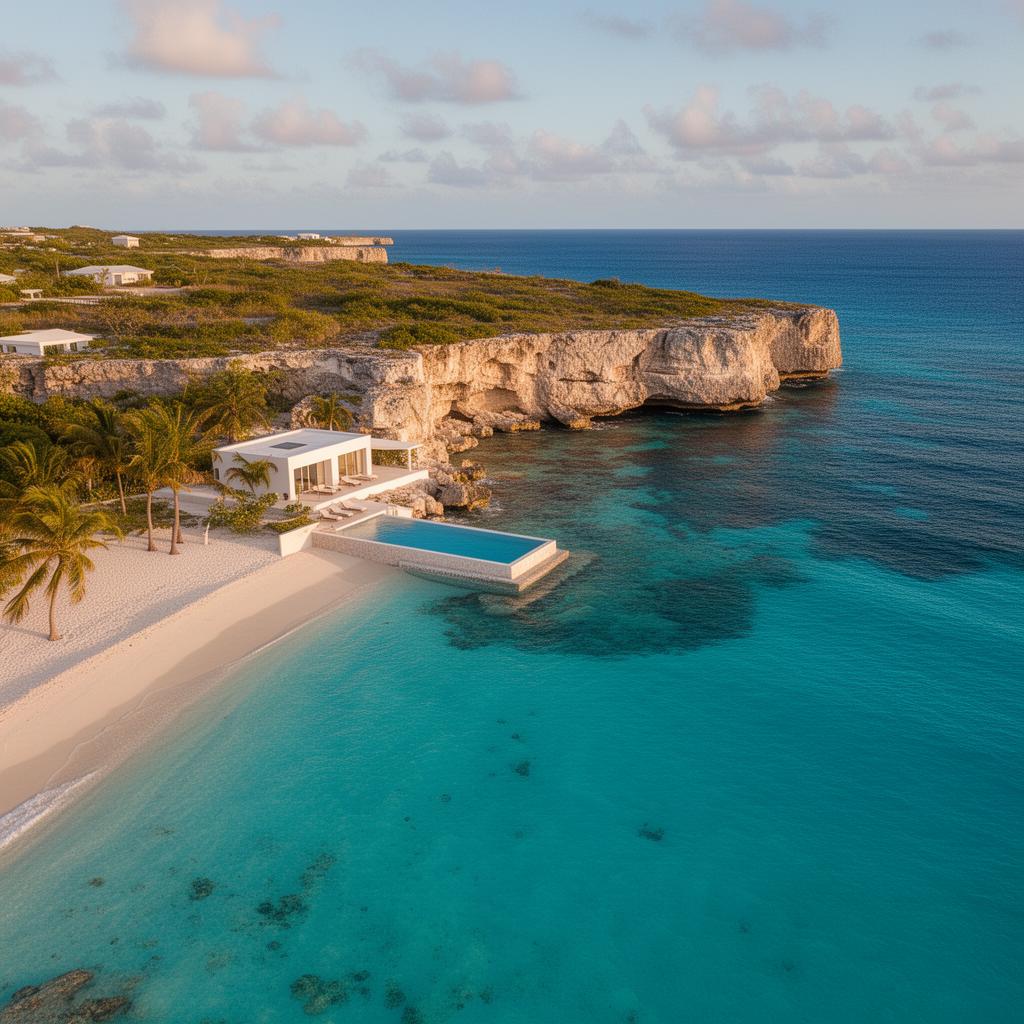
Willemstad, Curaçao
Pastel facades, design hotels, and a working Caribbean capital with serious depth.
About Willemstad
A sense of place.
Willemstad is the part of Curaçao that fits on a postcard, and the part that goes far beyond one. The pastel waterfront — the Handelskade — was painted that way, the story goes, because the governor's eyes ached from the white glare; what began as a remedy became one of the most photographed skylines in the Caribbean.
Behind the facade is a city that takes itself seriously. The Pietermaai district, once derelict, has been quietly restored into a string of chef-led restaurants, small galleries, and design hotels carved out of nineteenth-century townhouses. Otrobanda, on the other side of the floating bridge, holds the island's strongest cultural institutions — the Kura Hulanda museum, the Jewish synagogue (the oldest in continuous use in the Americas), and the markets where breakfast costs three dollars and tastes like memory.
Stay in Willemstad if you want a city as much as a beach. The water is fifteen minutes away in any direction; the culture is at the door.
Why stay here
Ideal for the traveler who wants —
Stays in Willemstad
Where to settle in.
Curaçao + Cartagena
10 daysCoastline to culture.
Begin on the quiet southern coast of Curaçao — coral cliffs, slow mornings, sea. Continue to the walled streets of Cartagena, where colonial Colombia opens onto music, light and the Caribbean rhythm of the old city.
Curaçao + Medellín
9 daysIsland calm and city energy.
Five days of stillness on the Dutch Caribbean coast, followed by the green hills of Medellín — design districts, coffee houses, and a city quietly redefining itself.
Curaçao + Coffee Region
11 daysSea to mountains.
From the slow rhythm of the Dutch Caribbean to the misty haciendas of Colombia's Eje Cafetero — two distinct climates, one continuous journey.
Caribbean Slow Escape
8 daysA quieter side of the Caribbean.
A pared-back week between Curaçao's western coves and a remote eco-stay on Colombia's Caribbean coast. For travellers who measure a trip in mornings, not miles.
Local guidance
What we'd tell a close friend.
culture
Pietermaai walk
A single restored street — start with coffee at Mundo Bizarro, end with dinner at Kome.
food
Plasa Bieu
The old market kitchens. Order whatever the cook points at. Cash only.
culture
Mikvé Israel-Emanuel Synagogue
The oldest synagogue in continuous use in the Americas — sand on the floor, by tradition.
beach
Mambo Beach
Closest swimmable beach to the city — go early or go elsewhere.
tip
Cross the floating bridge on foot
The Queen Emma Bridge opens for ships several times a day; the walk across is a Willemstad rite.
Nearby in Curaçao
Where to go next.
Begin your stay
Stay in Willemstad.
willemstadContinue exploring